
Digital Transformation Strategy Explained : How It Differs from Digital Strategy in 2026

In 2026, almost every organization claims to be “digital.”
Yet very few truly are.

Most businesses are running AI pilots, experimenting with automation, or migrating systems to the cloud. While these initiatives may improve efficiency, they do not automatically result in digital transformation strategy success.

The real challenge lies in one fundamental question:

Are you improving how you use digital tools—or fundamentally changing how your business operates?

That distinction defines the difference between digital strategy and digital transformation, and misunderstanding it is one of the biggest reasons digital initiatives fail.

Digital strategy and digital transformation
Digital Strategy And Digital Transformation

Why Understanding the Difference Matters in 2026

Digital investments are no longer optional. AI, automation, cloud platforms, and digital customer experience are now table stakes.

Yet many organizations still:
✍ buy technology without a clear business outcome
✍ confuse marketing optimization with enterprise transformation
✍ expect tools to fix broken processes
✍ fail to see ROI from digital initiatives

The result?
High spend, low adoption, frustrated teams, and leadership questioning the value of “digital.”

Understanding digital strategy vs digital transformation is the foundation for avoiding those failures.

What Is Digital Strategy in 2026

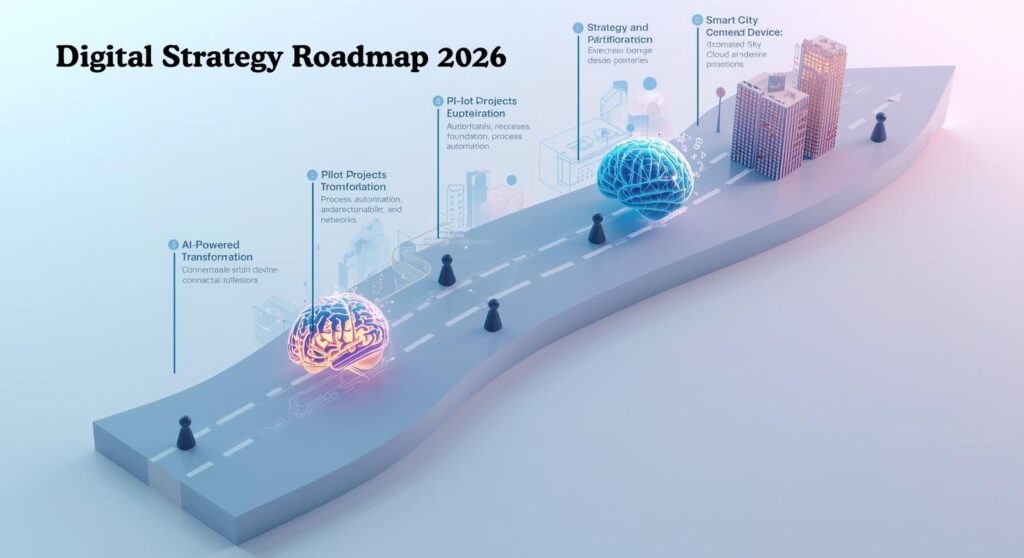
A digital strategy is a focused roadmap for how a company uses digital technologies, channels, and data to achieve specific business goals.
What Is Digital Strategy in 2026
Digital strategy answers the question : How do we use digital tools to perform better?
This is where digital strategy consulting adds value—by helping leaders make clear, prioritized decisions instead of chasing trends.

Key Components of Digital Strategy in 2026
A strong digital strategy typically includes:
🧠 AI-driven marketing and personalization
🧠 Data analytics and performance measurement
🧠 Digital channels (web, mobile, social, marketplaces)
🧠 Digital revenue streams and monetization
🧠 Customer experience optimization

Example : Designing multichannel marketing campaigns using predictive analytics to increase conversion and retention—without changing the core operating model of the business.

What Digital Strategy Is Not

✍ Not a tool shopping exercise
✍Not “being on every platform”
✍Not a one-time presentation deck

Digital strategy is about focus, sequencing, and measurable outcomes.

What Is Digital Transformation in 2026

Digital transformation is a company-wide change that fundamentally redesigns how an organization operates, delivers value, and competes—using technology as an enabler.

Digital transformation answers the question: How must the business itself change to survive and scale in a digital world?
This is where digital transformation consulting services come into play—because transformation affects systems, processes, culture, skills, and leadership.
Key Components of Digital Transformation in 2026
Most transformation efforts include:
🧠 AI and workflow automation
🧠 Cloud-native infrastructure
🧠 Modernized operations and processes
🧠 End-to-end customer experience redesign
🧠 A digital-first culture and operating model

Example : Automating inventory management, moving to a cloud-based POS system, integrating data across channels, and retraining teams to work in faster, cross-functional ways.
Digital transformation strategy
What Is Digital Transformation in 2026

What Digital Transformation Is Not

✍ Not just migrating to the cloud
✍ Not implementing AI without process redesign
✍ Not an IT-only initiative

Digital transformation is business transformation, enabled by technology.

Digital Strategy And Digital Transformation : Key Differences

Here’s the clearest way to understand the difference :
Area Digital Strategy Digital Transformation
Purpose Improve performance using digital tools Reinvent the business for the digital age
Scope Specific functions or channels Organization-wide change
Timeline Short to medium term Long-term, multi-phase
Dependency Tools, analytics, platforms Technology, people, process, culture
Leadership Often CMO, CTO, Product CEO-led, cross-functional
Outcome Better digital results New capabilities and operating model

Failing to understand this distinction causes fragmented efforts and wasted investment.
Digital strategy and digital transformation

Why Businesses Still Confuse the Two

Let’s be honest—this confusion exists for a few real reasons:

Buzzwords are overused – AI, cloud, CX, automation—all sound transformative.
Consulting and agencies blur the lines – Many providers sell strategy, transformation, and implementation as the same thing.
Everyone wants quick wins – Strategy feels safer. Transformation is disruptive.
Technology is mistaken for change – Tools are easier to buy than behaviors are to change.

This leads to fragmented efforts that never fully deliver.

How to Do Digital Strategy the Right Way

This is the process effective digital strategy consultants actually follow.

How Digital Transformation Actually Works

Digital transformation is harder—and that’s why it matters.

Step 1 : Define Business Outcomes (Not Technology Goals)

Start with measurable outcomes:
🧠 revenue growth
🧠 cost reduction
🧠 retention improvement
🧠 cycle time reduction

If you can’t measure it, it’s not a strategy.

Step 2 : Identify Customer and Value Gaps

Map where customers experience friction and where value leaks :
🧠 drop-offs
🧠 delays
🧠 manual interventions
🧠 complaints

If you can’t measure it, it’s not a strategy.

Step 3 : Audit Digital Channels and Analytics

Understand :
🧠 what’s working
🧠 what’s underperforming
🧠 what’s not measured correctly

Poor analytics = poor decisions.

Step 4 : Prioritize Digital Initiatives

Select a small number of high-impact initiatives :
🧠 growth drivers
🧠 experience improvements
🧠 efficiency gains

Equally important : decide what not to do.

Step 5 : Align Technology to the Strategy

Only now do you decide :
🧠 which tools to keep
🧠 which to integrate
🧠 which to replace

Technology should support strategy—not define it.

Step 6 : Build a 90-Day Execution Plan

Every initiative must have :
🧠 an owner
🧠 a timeline
🧠 a budget
🧠 success metrics

This turns strategy into action.

Step 1 : Executive Ownership

Transformation must be CEO-led.
Without that, it becomes an IT program that fails quietly.

Step 2 : Baseline the Current State

Measure :
🧠 manual effort
🧠 process delays
🧠 operational costs
🧠 system limitations

You cannot transform what you don’t understand.

Step 3 : Redesign the Operating Model

Decide :
🧠 how work flows end-to-end
🧠 who owns outcomes
🧠 where automation replaces manual work

This is the most skipped—and most important—step.

Step 4 : Build a Digital Transformation Roadmap

Sequence initiatives logically :
🧠 foundation first (data, integration, security)
🧠 then automation and AI
🧠 then optimization and scale

Step 5 : Fix Data Before Scaling AI

AI magnifies reality.
Bad data → faster bad decisions.

Step 6 : Drive Adoption and Change

Transformation fails without :
🧠 training
🧠 role redesign
🧠 incentives aligned to new behaviors

People don’t resist change—they resist unmanaged disruption.

How Digital Strategy and Digital Transformation Work Together

High-performing organizations understand the power of combining digital strategy consulting with a robust digital transformation strategy :
✍ Digital strategy sets clear direction, priorities, and measurable outcomes.
✍ Digital transformation strategies build long-term capabilities, modernize operations, and enable scalable growth.
✍ Continuous improvement ensures both strategy and transformation remain aligned with evolving business goals.

Think of it this way: Digital strategy shows where to go, while digital transformation ensures you can get there repeatedly.

Industry Applications in 2026

Healthcare : AI-enabled care coordination, telehealth optimization
Telecom : Cloud modernization, AI-driven billing and CX
Retail & E-commerce : Supply chain automation, omnichannel insights

Think of it this way : Digital strategy shows where to go, while digital transformation ensures you can get there repeatedly.

What Your Business Needs in 2026

👉 Choose digital strategy consulting if your focus is on clarity, performance improvement, and optimizing digital channels.
👉 Choose a digital transformation strategy if your systems, culture, or operating model are holding back growth and scalability.
👉 Many organizations fail because they pursue digital transformation consulting services without a clear strategy—or implement strategy without execution discipline.

Most failures occur when organizations attempt transformation without strategy—or strategy without execution.