
In 2026, almost every organization claims to be “digital.”
Yet very few truly are.
Most businesses are running AI pilots, experimenting with automation, or migrating systems to the cloud. While these initiatives may improve efficiency, they do not automatically result in digital transformation strategy success.
The real challenge lies in one fundamental question:
Are you improving how you use digital tools—or fundamentally changing how your business operates?
That distinction defines the difference between digital strategy and digital transformation, and misunderstanding it is one of the biggest reasons digital initiatives fail.

A digital strategy is a focused roadmap for how a company uses digital technologies, channels, and data to achieve specific business goals.
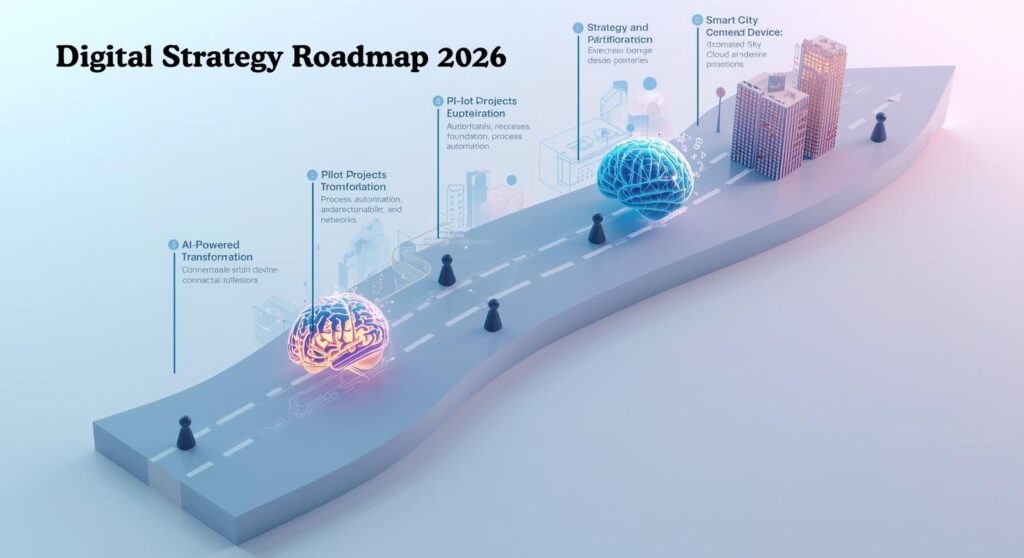
Digital strategy answers the question : How do we use digital tools to perform better?This is where digital strategy consulting adds value—by helping leaders make clear, prioritized decisions instead of chasing trends.
Digital transformation is a company-wide change that fundamentally redesigns how an organization operates, delivers value, and competes—using technology as an enabler.
Digital transformation answers the question: How must the business itself change to survive and scale in a digital world?This is where digital transformation consulting services come into play—because transformation affects systems, processes, culture, skills, and leadership.

| Area | Digital Strategy | Digital Transformation |
|---|---|---|
| Purpose | Improve performance using digital tools | Reinvent the business for the digital age |
| Scope | Specific functions or channels | Organization-wide change |
| Timeline | Short to medium term | Long-term, multi-phase |
| Dependency | Tools, analytics, platforms | Technology, people, process, culture |
| Leadership | Often CMO, CTO, Product | CEO-led, cross-functional |
| Outcome | Better digital results | New capabilities and operating model |